Certification Frameworks Guide Symbol Combination Rates in Mobile Entertainment Software
Theo Günther · Sep 28, 2026
Certification Frameworks Guide Symbol Combination Rates in Mobile Entertainment Software
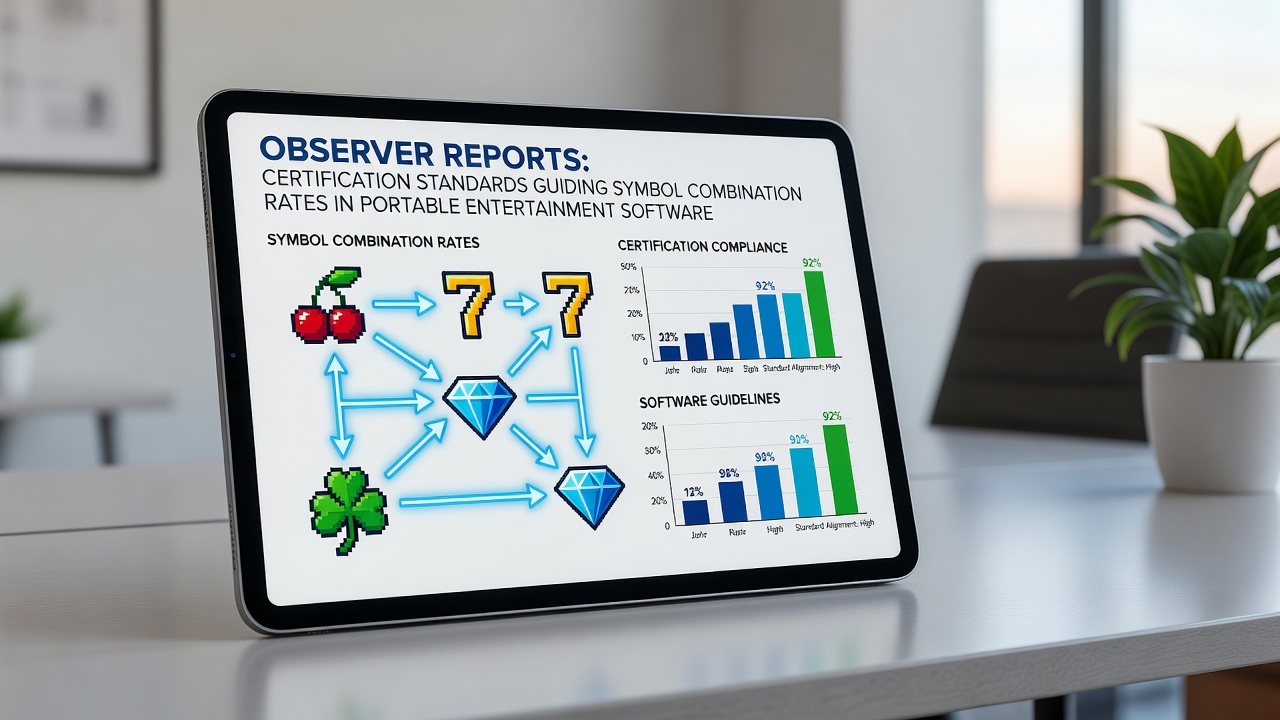
Observer reports from independent testing laboratories continue to shape how certification standards determine symbol combination rates across portable entertainment software platforms, and these documents detail the precise mechanisms that govern reel outcomes in mobile gaming applications. Data compiled through 2025 shows laboratories such as Gaming Laboratories International and iTech Labs issuing detailed evaluations that link certification protocols directly to hit frequency calculations, while operators in multiple jurisdictions adjust their software configurations to align with updated verification criteria released earlier that year.
Standards Development and Laboratory Oversight
Regulatory bodies in various regions maintain frameworks that require symbol combination rates to meet specific mathematical thresholds before software receives approval for portable deployment, and these requirements stem from long-standing agreements among testing authorities that emphasize reproducibility and fairness in random number generation. Observers note that certification cycles typically involve thousands of simulated spins to verify that combination frequencies fall within defined tolerance bands, and the resulting reports often reference alignment with standards from the Nevada Gaming Control Board alongside parallel guidelines used in Australian markets. Research institutions tracking these processes have documented how even minor deviations in reel strip configurations trigger re-evaluation cycles that extend approval timelines by several weeks.
Symbol Rate Calculations in Portable Systems
Portable entertainment software relies on compact processing environments that still must satisfy the same combination rate standards applied to larger platforms, and certification observers have recorded that mobile-optimized titles undergo identical spin volume testing despite differences in hardware constraints. Figures from industry reports indicate that symbol combination rates for high-volatility titles often target hit frequencies between 25 and 35 percent on base games, whereas lower-volatility designs maintain rates above 40 percent to comply with jurisdiction-specific payout expectations. Those who review certification files regularly observe that adjustments to reel weighting tables require fresh laboratory validation each time developers modify symbol distributions, and such changes appear frequently during optimization phases for multi-device compatibility.

September 2026 brought new observer documentation from testing facilities that examined how updated certification standards affect combination rates in games released for both iOS and Android environments, and these reports highlighted tighter tolerances for bonus symbol frequencies compared with earlier verification rounds. Data shows laboratories now require additional documentation when combination rates shift across different screen orientations, since portable devices introduce variables in display rendering that can influence perceived outcome distribution even when underlying RNG remains unchanged.
Regional Variations in Application
Certification standards applied in European markets often reference technical specifications from the Malta Gaming Authority that intersect with observer findings on symbol combination transparency, while Canadian provincial regulators incorporate similar laboratory data when reviewing portable software submissions. Those monitoring cross-border deployments note that operators must sometimes recalibrate symbol rates to satisfy multiple certification bodies simultaneously, and this process generates extensive observer reports that track each adjustment against original test results. Evidence from academic studies on gaming mathematics suggests that standardized combination rate reporting improves comparability across jurisdictions, although implementation timelines vary depending on local review procedures.
Impact on Software Development Cycles
Developers incorporate certification feedback loops early in the design phase for portable titles, and observer reports frequently cite examples where initial symbol combination proposals underwent revision after laboratory simulations revealed non-compliance with established frequency bands. The reality is that these iterative reviews extend development schedules yet reduce post-launch adjustment needs, since approved configurations already align with regulatory expectations across target markets. Industry organizations tracking software releases have recorded that titles passing initial certification with minimal observer comments reach wider distribution networks faster than those requiring multiple validation rounds.
Future Documentation Trends
Observer reports continue to evolve alongside advancements in portable hardware capabilities, and certification standards increasingly address how symbol combination rates interact with adaptive display technologies that alter visual reel presentations. Research indicates ongoing collaboration between laboratories and regulatory agencies aims to standardize reporting formats that capture both mathematical and user-interface dimensions of combination frequencies, which supports more consistent evaluation across diverse portable platforms.
Conclusion
Observer documentation on certification standards remains central to maintaining consistent symbol combination rates in portable entertainment software, and the accumulated reports provide detailed records that guide both regulatory compliance and technical implementation across global markets. These frameworks continue to adapt as testing methodologies incorporate new data on mobile-specific variables while preserving core requirements for fairness and reproducibility in gaming outcomes.